In the modern SEO, the section of your HTML is the "mission control" for your entire website. While most people stop at titles and descriptions, a true technical SEO knows that search engine bots are looking for a much more complex set of signals.
The Architecture of the Title Tag
It's not just about keywords; it's about weight. Search engines give more weight to words appearing at the beginning of the title. This is known as Keyword Front-loading.
The Meta Description as a "Conversion Engine"
While Google occasionally rewrites descriptions, providing a high-quality snippet is crucial for controlling your brand's narrative. In 2026, the best descriptions utilize semantic entities using related terms that prove to the algorithm that your page is authoritative on the topic.
Canonical Tags: Preventing Duplicate Content
Duplicate content is a "silent killer." If your site is accessible via http, https, www, or non-www, search engines may see them as different pages. The rel="canonical" tag tells Google exactly which version is the "Source of Truth." Without this, your link equity is split, and your rankings will suffer across the board.
Directing the Bots: Robots Meta Tags
Not every page should be indexed. Your Admin Dashboard or internal search results should be kept away from SERPs to preserve your Crawl Budget. Using allows bots to pass link authority through the page without cluttering the search index with low-value URLs.
Mobile-First Indexing and Viewport Meta Tags
In 2026, Google indexes the mobile version of your site first. If your tag isn't correctly configured, your mobile usability score will tank. A proper viewport tag ensures your site is responsive, preventing "content wider than screen" errors that frustrate users and hurt rankings.
The Rise of Structured Data (JSON-LD)
The future of meta-optimization is in Schema Markup. By adding a JSON-LD script to your head section, you achieve "Rich Snippets" those star ratings and FAQ dropdowns that appear directly in search results. This data helps search engines move from "indexing text" to "understanding concepts."
Core Web Vitals: Beyond the Tags
Modern SEO requires looking past the . Google's Core Web Vitals (LCP, FID, and CLS) measure how users experience your page load. Even with perfect meta tags, a slow-loading site or shifting layout will prevent you from reaching the top three results. Optimization of images and minification of CSS are no longer optional they are requirements.
Social Graph Mastery (Open Graph & X Cards)
Visibility isn't limited to search. When you share your tools on Steemit, Bluesky, or Quora, the og:image and og:type tags determine the visual preview. A professional image preview can increase social engagement by over 250%, driving secondary traffic that signals "relevance" back to Google.
Conclusion: Data-Driven Optimization
At Toolshub123, we built our Meta Tag Analyzer to handle this technical heavy lifting. It scans for these technical nuances so you don't have to. SEO is a game of inches; don't leave your metadata to chance.
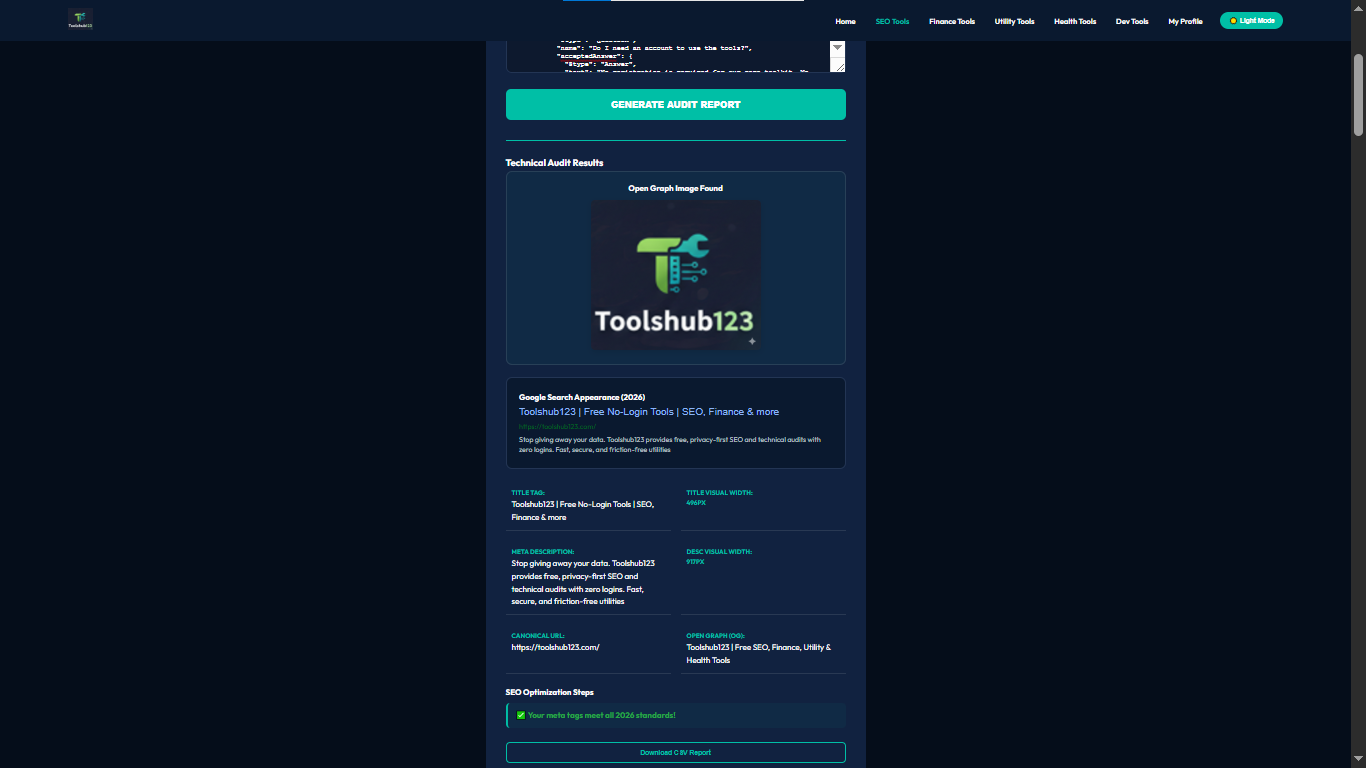
This is a screen shot of the meta tag audit tool of our own website. We created these tools to be 100% secure and private. It uses client side processing so we can not see or get any of your data, because we believe that tools that say they are free should not cost you your data.
We love to get feedback from you so feel free to suggest or share your thoughts on this in the comments below!
💬 Comments
Leave a Comment
Comments